
Line Race: Police Pursuit
CASUAL AZUR GAMESRacing
4.61.32K Reviews
- Version
- 2.0.2
- Installs
- 50.00M
- Age Rating
- Everyone
Screenshots
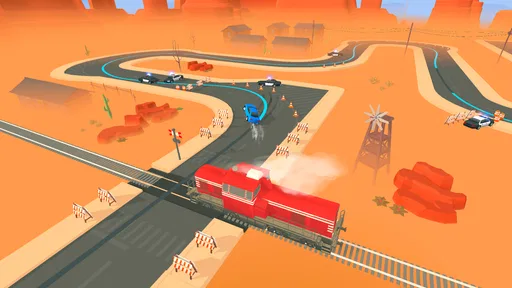
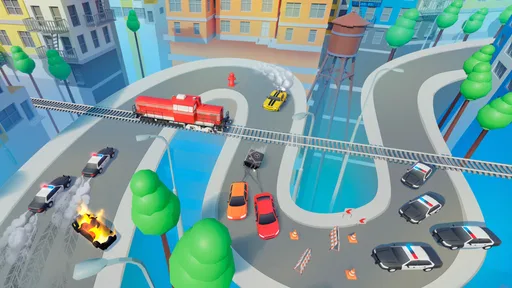
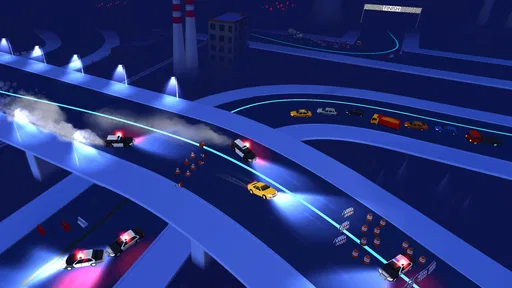
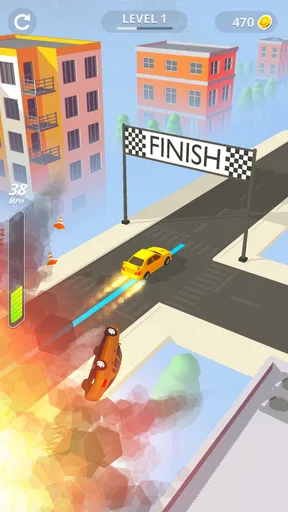

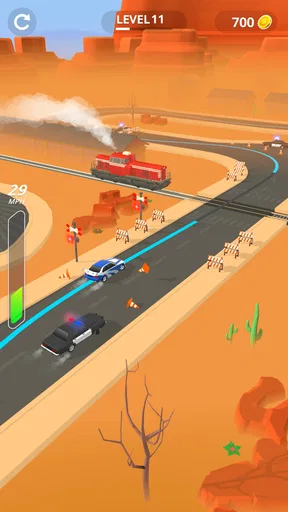
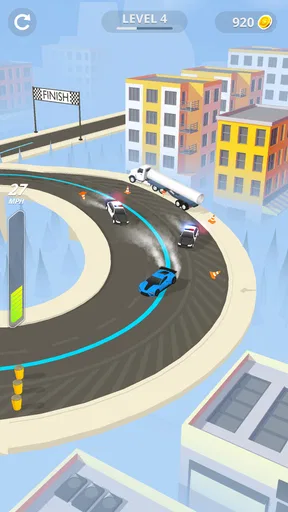
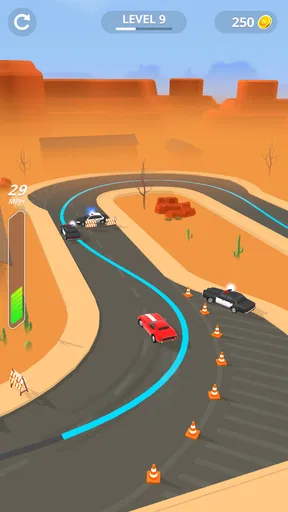
Our Review of Line Race: Police Pursuit
 Analysis by Appyee
Line Race: Police Pursuit grabbed my attention because it turns racing into something I can understand within seconds: guide the car, manage the line, drift through danger and keep moving before the police catch up. That simplicity is its strongest first impression. I do not need to learn a large control system or spend time preparing a vehicle before a short session. I can open it when I have a few spare minutes and immediately get into the action.
After spending time with it, I see a game built more for quick reactions and repeat attempts than for a deep racing career. It belongs to the racing category, comes from CASUAL AZUR GAMES, and is free to start. Its Everyone age rating also makes it approachable for a broad audience. The important question is not whether it creates an exciting first session—it does—but whether that excitement survives once the novelty of police chases and fast cars begins to fade.
Why the first week feels so easy to enjoy
The opening appeal comes from the low barrier between launching the game and making a meaningful move. In many racing games, even casual ones, I have to remember several buttons, watch fuel or vehicle statistics, or learn a track before I feel competent. Here, the central idea is much more direct. I focus on steering through the route, sliding when necessary and reacting to the chase rather than managing a complicated garage.
That makes it especially suitable for short breaks. I can imagine playing it while waiting for an appointment, during a commute break or at the end of the day when I want something active but not mentally heavy. A failed attempt does not feel like a major investment of time, so restarting is easier than it is in a longer racing game. This quick retry rhythm is one of the reasons the game can feel surprisingly sticky during the first week.
The police pursuit gives ordinary turns a little more pressure. Without that extra threat, a simple line-based racer could feel like a relaxed exercise in following a route. The chase changes the mood: I am not only trying to stay on the road, but also trying to avoid losing momentum while something is pushing me forward. That combination rewards attention without requiring the realism or precision expected from a simulation racer.
I also like that the game communicates its identity clearly. It is not pretending to be a full console-style racing experience on a phone. The appeal is immediate movement, quick decisions and the satisfaction of handling a difficult section better on the next attempt. If you prefer games that explain themselves through play rather than through long tutorials, this is a comfortable fit.
Still, the same simplicity that makes the first session welcoming can limit the first week for players who want a more substantial racing structure. Someone looking for detailed car tuning, realistic handling, large competitive events or a carefully developed campaign may find the experience lightweight. The game is at its best when I treat it as a compact arcade challenge, not as a replacement for a serious driving game.
What I learned by changing the way I play
My first instinct was to react to every turn as quickly as possible, but that was not always the best approach. I got better results when I looked slightly ahead and treated the route as a sequence of decisions rather than a series of emergencies. The useful habit is to prepare for the next change in direction before the car reaches it. That small adjustment makes the game feel less random and gives the pursuit pressure a more manageable shape.
Another practical tip is to avoid treating every slide as a mistake. A controlled drift can be more useful than a sharp correction, especially when a sudden movement would send the car away from the intended line. I found that smooth, deliberate steering was more reliable than repeatedly making dramatic corrections. This is a simple distinction, but it changes the game from frantic swiping into a small exercise in timing.
I also recommend using short sessions to learn rather than chasing a perfect run immediately. When I replayed a difficult section with one specific goal—entering a turn earlier or keeping a steadier line—I could identify what had gone wrong. That approach is more productive than restarting without changing anything. It is a good example of the game’s hidden strength: although the controls are accessible, improvement still comes from observing patterns.
The game has attracted a substantial audience, with an average rating of 4.6 from roughly 55 thousand ratings and more than 50 million installs. Those figures explain why it is easy to encounter as a casual racing recommendation, but they do not automatically mean it will suit every player. Its popularity reflects the strength of its immediate concept; long-term satisfaction still depends on whether you enjoy repeating compact challenges.
What remains useful after the novelty wears off
The month-to-month question is more difficult. During the first few days, the chase itself supplies much of the motivation. Later, I need another reason to return. For me, that reason is the small satisfaction of improving control. The game works when I approach it as a reflex routine: play briefly, notice where I lose consistency, then try again with a calmer line.
That recurring value is real, but it is narrower than what I get from a racing game with a broad progression system. A traditional alternative may offer championships, vehicle upgrades, varied events and a longer-term sense of ownership. A realistic driving simulator may provide more precise handling and a stronger feeling of mastering a vehicle. Line Race: Police Pursuit is better when I want immediate action and less preparation, but it is not the stronger choice for players who measure value by depth.
Compared with endless runners, it has a more recognizable racing identity because the route and pursuit give my movement a specific purpose. Compared with large arcade racers, it asks for less time and attention. That middle position is useful: it can fill the gap between a passive time-killer and a demanding racing game. The trade-off is that its replay value depends heavily on whether repeating the same kind of challenge remains enjoyable to me.
For an everyday scenario, I would use it as a five-minute reset between tasks. I would not launch it expecting to complete a long event or make meaningful progress through a complex season. Instead, I would play until I make a clean run or until my concentration drops. That boundary matters because the game is more enjoyable when I stop while the quick-reaction loop still feels fresh.
The free entry also helps with this role. I can test the basic experience without committing money first. There are in-app purchases priced at $4.49 per item, so I would pay attention to the purchase prompts and decide whether any optional spending genuinely improves my experience. For a game designed around brief sessions, I would not spend automatically just because I had a difficult run. I would first ask whether the purchase adds lasting value or only makes a single moment easier.
Who will keep coming back?
I think the strongest long-term audience is made up of players who enjoy repetition with small improvements. If you like learning a compact control pattern, shaving mistakes from a route and testing your reactions against pressure, the game can remain a pleasant habit. It is also a good choice for younger players and families who want an accessible racing theme rather than a complicated simulator, especially with its Everyone content rating.
It is less convincing for someone who needs social competition, detailed customization or a large variety of racing disciplines. I would also suggest skipping it if you dislike restarting after mistakes. The game’s appeal depends on accepting that a short attempt may end quickly and that the next attempt is part of the design, not an interruption.
The current version is 2.0.2, and the minimum operating system is Android 7.1. That makes it relevant to people using older Android hardware, although the experience will still depend on the individual device. I would check that the phone feels responsive before judging the controls too harshly. In a game based on line changes and timing, even small delays can feel like a design problem when they may actually come from the device.
Maintenance, fatigue and the cost of keeping it installed
The maintenance burden is low in the everyday sense: I do not need to build a complicated setup, remember a long list of upgrades or reserve a large block of time. The main maintenance is personal. I need to decide when the game is still giving me a satisfying challenge and when I am playing automatically out of habit. That distinction is important because short-session games can remain installed for months without actually earning regular playtime.
My biggest source of fatigue is repetition without a fresh personal goal. If I simply repeat attempts while expecting the game itself to keep creating new excitement, the chase can start to feel familiar. The solution is to change the objective: focus on cleaner turns, fewer corrections or a more controlled pace. That does not transform the game into a deeper racer, but it can extend its useful life for players who enjoy self-imposed improvement.
Another possible point of friction is the tension between accessible controls and limited complexity. At first, having fewer systems is liberating. Later, I may want more ways to express skill. If every challenge continues to ask for essentially the same kind of reaction, my interest can decline even if the controls remain pleasant. This is where a fuller arcade racer becomes the better alternative.
I would also keep the purchase model in mind during longer use. Free games are easiest to enjoy when I decide in advance what role they have in my routine. For me, that means treating Line Race: Police Pursuit as a free casual game first, not as a hobby that requires spending to stay enjoyable. If I feel pressure to buy after repeated failures, I would take that as a sign to pause rather than assume payment is necessary.
There is a useful maintenance trick for this kind of game: remove it from the automatic rotation and return only when I genuinely want a quick driving challenge. That prevents the short loop from becoming background noise. When I come back after a break, the police pursuit feels more energetic, and I can tell more clearly whether the basic handling still appeals to me.
Where the experience can lose momentum
The central weakness is not that the game is too simple; it is that simplicity places a limit on how much variety I can expect from it. Players who want a growing collection of systems may reach that limit sooner than players who enjoy pure repetition. The first-week excitement comes from discovering how the chase and steering feel together. Once that discovery is complete, the game needs my own interest in refinement to carry it forward.
It can also be tiring if I play for too long in one sitting. The quick-reaction format encourages “one more attempt,” but repeated concentration eventually turns that energy into irritation. I found that shorter sessions produced a better impression than extended grinding. Stopping after a good run is not merely sensible; it protects the game’s strongest quality, which is its ability to deliver a compact burst of action.
Players searching for realism should look elsewhere. This is an arcade-style interpretation of racing, built around movement and pursuit rather than authentic vehicle behavior. That is a strength when I want something immediately understandable, but a weakness when I want braking distances, detailed physics or the feeling of managing a real car. Choosing the right expectation makes a major difference.
The same applies to progression. If your ideal mobile racer gives you a clear long-term project, this may feel too modest. If your ideal game lets you start playing during a spare moment and stop without losing a significant investment, its compact design becomes an advantage. I would make that decision before downloading rather than hoping the game will turn into a different type of racer later.
My long-term verdict on keeping it installed
After the initial novelty fades, Line Race: Police Pursuit earns a place on my phone as a specialist casual racer, not as my only racing game. I would keep it installed when I wanted fast sessions, simple controls and the pressure of a police chase without the preparation demanded by larger alternatives. Its free starting point, approachable age rating and broad device compatibility make it easy to try.
I would not recommend it as strongly to players who need deep progression, realistic driving or constant variety. For those people, a more comprehensive racing title will offer better month-to-month value. This game asks for a different kind of commitment: not a long campaign, but a willingness to repeat short challenges and improve through attention.
The most useful way to approach it is to give each session a purpose. Use it for a brief reaction workout, practice looking ahead through turns, or play until you complete a cleaner run than before. Do not expect every return to feel new, and do not confuse a free download with an obligation to make purchases. With those expectations, its limitations become easier to accept.
My final view is positive but measured. The game succeeds because it gets to the fun quickly and gives ordinary spare moments a clear racing shape. It does not fully solve the long-term variety problem, and its repeated pursuit loop can become tiring if I overplay it. Still, for anyone who wants a compact arcade racer that rewards smoother decisions rather than complicated preparation, I think Line Race: Police Pursuit is worth trying. Its lasting value comes from the quality of a short session, not from pretending to be a complete racing lifestyle.
My recommendation: install it if you enjoy quick retries, controlled drifting and pressure-filled routes. Skip it if you need a deep garage, realistic simulation or a large competitive structure. In the right role, it is an easy game to return to; in the wrong one, its simplicity will become obvious quickly.
Verdict
Strengths of Line Race: Police Pursuit
- Fast, simple gameplay that is easy to understand from the first attempt.
- Short races make it suitable for quick breaks or casual play.
- Police pursuit theme adds tension to otherwise straightforward driving.
- Responsive controls help you change direction quickly during chases.
- Lightweight design should run smoothly on many Android and iOS devices.
Limitations of Line Race: Police Pursuit
- Gameplay can become repetitive after several similar pursuit rounds.
- Limited depth may disappoint players looking for a full racing experience.
- Frequent obstacles can feel more frustrating than skill-based at times.
- Progression may offer little incentive once the initial challenge fades.
- Ads or optional purchases may interrupt the otherwise quick gameplay.
Other Releases by CASUAL AZUR GAMES
View All
Worms Zone .io - Hungry Snake
Action4.3

Stack Ball - Crash Platforms
Arcade4.5

STAR: Super Tricky Amazing Run
Arcade4.2

State.io — Conquer the World
Strategy4.1
Similar Picks in This Category
View All
Hill Climb Racing
Fingersoft4.3

Dr. Driving
SUD Inc.4.2

Traffic Rider
skgames4.5

Asphalt 8 - Car Racing Game
Gameloft SE4.6

Race Master 3D: Car Racing
Beresnev Games4.6

Extreme Car Driving Simulator
AxesInMotion Racing4.3
Frequently Asked Questions
What is Line Race: Police Pursuit?
Line Race: Police Pursuit is a fast-paced mobile driving game built around drawing or following racing lines while escaping police vehicles. The gameplay focuses on quick reactions, route planning, and avoiding obstacles as you move through different environments. It is designed for short sessions, making it suitable for casual players who want an easy-to-learn game with progressively more challenging pursuits.
How do you play Line Race: Police Pursuit?
The main objective is to guide your vehicle along the track, maintain control, and stay ahead of the pursuing police. Depending on the level, you may need to steer around barriers, choose safer routes, collect useful items, and avoid crashes. Controls are generally simple and touch-based, but later stages require better timing because the roads become more demanding and police pressure increases.
Is Line Race: Police Pursuit free to download and play?
Line Race: Police Pursuit is generally available as a free download, allowing players to begin racing without paying an upfront purchase price. However, free mobile games may include advertisements, optional in-app purchases, or both. These can be used to unlock additional content, remove advertising, or obtain gameplay-related bonuses, so it is worth checking the store listing and purchase settings before downloading.
Can Line Race: Police Pursuit be played offline?
Some parts of Line Race: Police Pursuit may work without a continuous internet connection, especially basic racing levels that are already installed on the device. Nevertheless, an internet connection may be required for advertisements, updates, analytics, cloud features, or in-app purchases. If offline access is important to you, test the game after disabling mobile data and Wi-Fi, since this behavior can change between updates.
Is Line Race: Police Pursuit suitable for children?
Line Race: Police Pursuit is usually easy for younger players to understand because its controls and objective are straightforward. Even so, parents should review the official age rating, advertising content, privacy information, and available in-app purchases before allowing children to play. Police-chase themes are presented in an arcade style, but repeated ads or optional purchases may be the main concerns for families.
Play our best games!


